Buy Property in Costa Rica as a Foreigner: 2026 Buyer’s Guide
Learn how foreigners can buy property in Costa Rica, compare titled and concession land, check registry details, reduce risk, and build a safer local property search.
Category: Tips & Advice
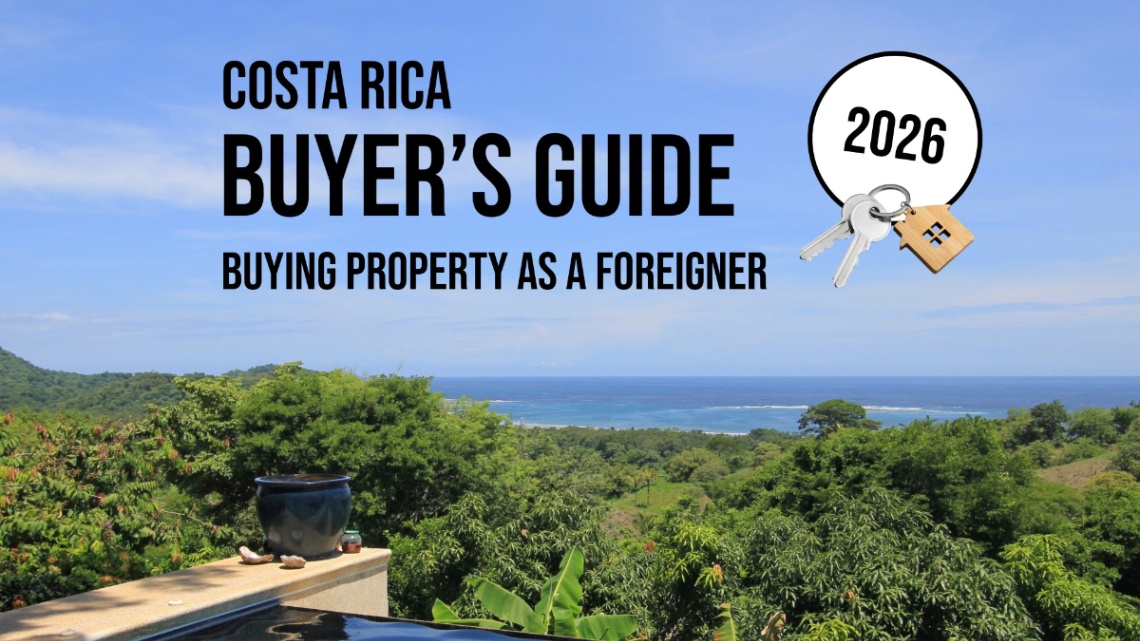
Buying Property in Costa Rica as a Foreigner: 2026 Guide for U.S., Canadian and International Buyers
If you are thinking about buying property in Costa Rica as a foreigner, you are probably not just comparing beautiful homes online. You are trying to understand a different country, a different real estate market, a different legal process, and a lifestyle decision that may affect your family, finances, and long-term plans.
That can feel exciting. It can also feel slightly overwhelming.
Quick answer: Foreigners can generally buy titled property in Costa Rica without residency. U.S., Canadian, European and other international buyers can often hold strong ownership rights, but the title, survey, registry record, seller authority and any concession or maritime-zone exposure still require professional review.
The smarter question is not only whether you can buy. It is whether the specific property you are considering is legally clear, fairly priced, practically manageable, and genuinely right for the life you want to create in Costa Rica.
This guide follows the real buyer journey:
who can buy property in Costa Rica;
what type of property fits your goals;
where to look for property listings near Tamarindo and Guanacaste;
what ownership structure applies;
how the property purchase process works;
what legal requirements and due diligence matter;
which budget questions to confirm before closing;
how to find reliable real estate agents and listings;
and how to avoid common risks before you make an offer.
Team Henkel and Williams supports international buyers in Tamarindo, Playa Langosta, Playa Grande, Hacienda Pinilla, Reserva Conchal, Papagayo, and the wider Guanacaste region. The aim is not to push you toward every listing. It is to help you narrow the search to the right property, in the right area, with the right checks in place.
On this page
Jump to the foreign-buyer process, ownership checks, costs, risks and next steps.
Key Takeaways for Foreign Buyers
Foreigners can usually buy titled property in Costa Rica.
U.S. citizens, Canadians, Europeans, and many other foreign buyers often do not need residency to purchase titled real estate in Costa Rica.
Titled property, concession land, and maritime-zone property require different legal checks.
A qualified real estate attorney should review the title search, property registry record, survey plan, liens, seller authority, and closing documents.
The right area depends on how you plan to use the property: vacation home, rental condo, relocation home, luxury villa, beachfront property, or land for a custom build.
Budget planning should go beyond the purchase price and should include closing costs, HOA fees, maintenance, insurance, utilities, property management, and possible rental-related costs.
A focused property search is usually safer than chasing every attractive listing online.
Team Henkel and Williams helps foreign buyers compare Tamarindo-area communities, narrow the search, and coordinate with trusted local professionals where relevant.
Can Foreigners, U.S. Citizens and Canadians Buy Property in Costa Rica?
Yes. Foreigners can generally buy property in Costa Rica, including titled homes, condos, villas, beachfront properties, and land. U.S. citizens and Canadians can usually purchase titled property without becoming residents first.
For standard titled property, foreign buyers can often hold ownership rights similar to Costa Rican citizens once the purchase is correctly reviewed, closed, and registered. That makes Costa Rica real estate relatively accessible compared with many international property markets.
However, not every property is the same. A titled condo, a gated-community villa, an ocean-view home, a beachfront property, concession land, and a parcel held by a Costa Rican corporation can all involve different legal and practical questions.
Before you fall in love with a property, pause and ask a calmer question: what am I actually buying?
Can a U.S. Citizen Live Permanently in Costa Rica by Buying Property?
Buying property in Costa Rica does not automatically give a U.S. citizen, Canadian buyer, or other foreigner the right to live permanently in Costa Rica. Property ownership and immigration status are separate matters.
If your plan is to live in Costa Rica full-time or semi-permanently, treat the real estate purchase and residency planning as two connected but separate tracks:
a real estate attorney reviews the property, title search, registry record, and closing documents;
an immigration attorney reviews residency options, eligibility, and documentation;
a local real estate agent helps match the property to your lifestyle, location, and ownership goals.
Buying a house can support a longer-term move, but it does not replace the legal process required to live permanently in Costa Rica.
Do Foreigners Need Residency to Buy Property in Costa Rica?
Usually no. Foreign buyers generally do not need residency to purchase titled property. Residency, legal stay, and immigration status are separate matters.
That distinction is important for U.S. citizens, Canadians, Europeans, and other foreign buyers who may be planning both a property purchase and a future move. You can often buy before becoming a resident, but you should review residency separately if you want to live in Costa Rica long term.
Start With Your Goal: How Will You Use the Property?
Most foreign buyers begin by asking, “What is for sale?”
A better first question is: “What kind of ownership life do I actually want?”
That shift matters. You are not only choosing a house, condo, villa, or piece of land. You are choosing how easy the property will be to enjoy, maintain, rent, visit, and eventually resell.
The right property depends on how you plan to use it. A vacation condo, a relocation home, a luxury villa, a beachfront property, and a buildable lot can all be good choices for the right buyer, but they create very different responsibilities.
Buyer Goal: Second Home or Vacation Home
If you want a second home or vacation home, your priorities may include:
comfort and low maintenance;
easy access to the beach, restaurants, and services;
reliable property management;
simple ownership from abroad;
rental potential when you are not there.
For this buyer, a well-located condo, upscale home, or turnkey villa near Tamarindo, Playa Langosta, or a gated community may make more sense than a complicated build project or remote land purchase. If beach lifestyle is central to the decision, it is worth comparing the best beaches near Tamarindo before choosing the exact area.
Buyer Goal: Rental-Focused Condo or Investment Property
If rental income matters, you need to look beyond the beauty of the property. A strong vacation rental property is not just attractive. It is practical for guests, clearly reviewed, and manageable during high and low season.
Important factors include:
walkability;
seasonality;
rental restrictions to be confirmed through the HOA, property documents, or legal review;
property management;
cleaning and maintenance logistics;
realistic net income after expenses.
Rental potential can be a useful part of the decision, but it should never be treated as guaranteed. A better investment search asks whether the property still makes sense after maintenance, management, taxes, HOA costs, vacancies, repairs, and conservative income assumptions.
Buyer Goal: Full-Time or Future Relocation Home
If you are planning to move to Costa Rica with children or for a major lifestyle change, daily life becomes more important than postcard appeal.
You may need to consider:
schools;
internet;
healthcare;
road access;
community;
safety perception;
storage and yard space;
pets and vehicles;
distance to amenities.
For families, the school decision can shape the property search as much as the home itself. Before choosing a neighborhood, compare international schools and family-friendly real estate considerations in Costa Rica , then test real commute times during a scouting trip.
Buyer Goal: Luxury Villa, Ocean-View Home or Legacy Property
If you are looking at luxury homes, ocean-view homes, villas, or gated estates, the priorities often change. Privacy, architecture, security, staffing, high-level property management, long-term value and ease of ownership become more important.
For this buyer, time and fit matter. A stronger search is not about touring everything available. It is about filtering quickly toward the properties that genuinely fit your lifestyle, privacy needs, family use, and long-term plans.
Buyer Goal: Land or Custom Build
If you are purchasing land in Costa Rica or planning to build a custom home, the due diligence is usually more involved. For a deeper look at land-specific due diligence and the buying process, see the Buying Land in Costa Rica guide.
Before purchasing land, ask the appropriate professionals to confirm:
water availability;
road access;
zoning;
slope and soil;
permits;
environmental restrictions;
building feasibility.
Land can be appealing because it gives you more control over design and location. It can also become complicated if access, utilities, permits, buildability, or environmental restrictions are not clear from the beginning.
What Types of Properties Are Available and Where Are the Best Places to Buy in Costa Rica?
As a foreign buyer, you can usually choose from many types of Costa Rica property, but each option comes with different expectations, costs, and checks. The best places to buy property depend on how you plan to use the home, how often you will visit, whether you want rental potential, and how much support you need while owning from abroad.
Comparing real estate options early helps you avoid wasting time on properties that look appealing online but do not fit your ownership goals.
Property Type and Area Fit: Comparison Table
Goal | Type of property to consider | Best-fit areas to compare | Extra checks |
|---|---|---|---|
Easy vacation use | Condo or turnkey home | Tamarindo, Playa Langosta | HOA rules, rental policy, property management |
Rental income | Walkable condo or villa | Tamarindo, Playa Langosta | Rental history, seasonality, realistic net income |
Family relocation | Single-family home | Hacienda Pinilla, Playa Grande, selected Tamarindo-area communities | Schools, internet, healthcare, daily access |
Luxury lifestyle | Villa, ocean-view home, or gated estate | Papagayo, Reserva Conchal, Hacienda Pinilla | Privacy, staff, maintenance, security |
Custom build | Land in Costa Rica | Selected Guanacaste communities with verified access and services | Water, access, zoning, permits |
Beach lifestyle | Beachfront or beach-close property | Tamarindo, Playa Langosta, Playa Grande, Papagayo, selected coastal pockets | Title, maritime zone, concession status |
Long-term planning | Hold property personally or through a structure | Depends on tax, estate planning, and resale goals | Attorney and accountant review |
Area Fit: Popular Places to Buy Property Near Tamarindo and Guanacaste
Costa Rica property is highly local. A short drive can change the entire ownership experience, including:
road conditions;
noise levels;
access to services;
rental demand;
privacy;
school access;
daily rhythm.
That is why the area decision should come before the individual listing decision, especially when purchasing a property from abroad.
For many U.S. and Canadian buyers, Tamarindo and nearby Guanacaste communities combine beach living with an established international community. The region also offers restaurants, surf, clinics, schools, gated communities, beach clubs and property management options.
Tamarindo works well for buyers who want surf, restaurants, nightlife, walkability, services, and strong visitor demand. It often appeals to vacation-home buyers and rental-focused investors who want convenience and visibility.
Playa Langosta is close to Tamarindo but generally quieter and more residential. It can suit buyers who want beach proximity and access to town without being in the middle of the busiest activity.
Playa Grande appeals to buyers who want surf, nature, lower density, and a more relaxed rhythm. It can suit lifestyle and relocation buyers who prefer space and a stronger connection to the natural environment.
Hacienda Pinilla is often attractive for buyers who want gated living, golf, beach access, amenities, larger homes, and a more structured community environment. Buyers comparing this area can go deeper with the Hacienda Pinilla real estate guide .
Reserva Conchal offers resort-style living, beach club access, golf, polished amenities, and a more managed ownership experience.
Papagayo is more exclusive and luxury-oriented, with high-end villas, privacy, and a premium coastal setting.
A buyer may start with a dream property in mind. The stronger decision comes from matching the property and location to daily use, ownership costs, investment goals and long-term plans.
How the Costa Rican Real Estate Market Works for Foreign Buyers
Costa Rican real estate can feel familiar on the surface, but the local market works differently from many U.S., Canadian, and European markets.
How Costa Rica Differs From U.S. and Canadian Markets
Important differences may include:
listing information can be less centralized;
property price expectations can vary by seller;
the buyer and seller often rely heavily on local professionals;
title, ownership, access, taxes, HOA rules, and closing steps may need more manual verification;
local market context matters more than simply comparing online listings.
For you as a foreign buyer, the search should not be based only on online listings. A property may look attractive, but the real question is whether the price, location, legal structure, and ownership costs make sense in the local market.
This is especially important in a foreign country where market norms, documentation, seller expectations, and legal procedures may differ from what you are used to at home.
If you are focused on Tamarindo specifically, review the Tamarindo, Costa Rica real estate guide before comparing individual properties.
Property Ownership in Costa Rica: Titled Property, Concession Land and Corporations
Once you know how you want to use the property and where you want to look, the next step is ownership structure.
This is where clear guidance becomes important. A property may look simple online, but the legal structure behind it matters.
What Is Titled Property in Costa Rica?
Titled property is registered in the National Registry. For many foreign buyers, titled property is the simplest and most familiar structure.
Fee simple ownership generally refers to strong private ownership rights over titled land. This is often what foreign buyers hope to secure when they buy property in Costa Rica.
Even with titled property, your attorney should still confirm:
title record;
property registry details;
survey plan;
liens, mortgages, annotations, or easements;
seller authority;
restrictions that could affect use, transfer, or resale.
What Is Concession Land in Costa Rica?
Concession land may apply in parts of the maritime zone near the coast. In simple terms, concession land is not the same as standard titled property.
Instead of owning the land in the usual private-ownership sense, the buyer may be acquiring rights to use or occupy the land under specific legal conditions.
Purchasing beachfront property requires extra review because some coastal land may be affected by public land rules, concession laws, municipal approvals, and maritime-zone restrictions.
Concession land is not automatically unsuitable, but it should be reviewed carefully before purchase. Your attorney should clarify concession status, transferability, permitted use, renewal conditions, municipal approvals, and any limits on building, renting, or resale.
How Should Foreign Buyers Hold Property?
Some foreign buyers hold property personally, while others use a Costa Rican corporation or another structure for administrative, tax, or estate-planning reasons. There is no single best structure for every buyer.
Before deciding how to hold property, foreign buyers should discuss ownership, inheritance, tax reporting, signing authority, and long-term estate planning with a qualified attorney and accountant. The right structure depends on family situation, investment goals, financing, residency plans, and future resale intentions.
If long-term resale is part of the plan, buyers should also think ahead about what future sellers need: documentation, property condition, realistic pricing, and strong market positioning. The Costa Rica property seller guide is useful context for understanding the other side of a future transaction.
The Property Purchase Process in Costa Rica
The property purchase process in Costa Rica becomes much easier when you see it as a sequence with the right people involved, rather than one big legal mystery.
Understanding the process before you start touring homes can make each step calmer, more deliberate, and less reactive.
Step-by-Step Process for Buying Property in Costa Rica
A typical process in Costa Rica looks like this:
Define your budget, use case, and preferred areas.
Choose the type of property that fits your goals.
Build a focused property search with Team Henkel and Williams or another local real estate agent.
Review current Costa Rica property listings and compare local areas.
Visit or remotely evaluate suitable properties.
Make an offer with clear conditions and timelines.
Sign an option to purchase or purchase agreement.
Place the deposit in escrow when applicable.
Complete due diligence with a real estate attorney.
Finalize closing documents with the notary public.
Register the property transfer in the National Registry.
Set up ownership, utilities, HOA, maintenance, and management after closing.
A clean purchase should not be rushed. Team Henkel and Williams can help you identify which items need confirmation, while the relevant attorney, HOA, seller, municipality, inspector, accountant, or property manager should provide the actual documentation or professional answer.
Common reasons to slow down include:
unclear ownership structure;
incomplete HOA documents;
water availability questions;
concession land or maritime-zone issues;
corporate cleanup;
permit or registry issues.
A straightforward titled property may often be planned around a 30- to 60-day closing window. More complex transactions can take longer.
Can I Buy Property in Costa Rica From Abroad?
Yes, it is possible to buy property in Costa Rica from abroad, but it requires careful coordination.
Remote buyers should use detailed video tours, local area context, attorney review, escrow onboarding, inspection, survey review, title review, registry checks, and a clear property management plan after closing.
Team Henkel and Williams can help keep this process calm and practical by narrowing the search, arranging the right local context, and coordinating with the professional team involved where relevant.
The key principle is simple: do not confuse online attractiveness with real-world suitability.
Making an Offer With the Right Team Around You
Making an offer is not just about choosing a price. It is about setting the conditions that protect the buyer while still giving the seller confidence.
A strong offer should clearly address:
purchase price, currency and payment method;
deposit amount and escrow instructions;
due diligence period, inspection rights and title contingencies;
closing date and allocation of closing costs;
included furnishings or appliances;
HOA, registry and financing conditions;
what happens if either side does not perform.
This is where a guided process matters. Team Henkel and Williams can help make the offer stage feel organized by keeping the buyer, seller, attorney, escrow provider, and other relevant professionals aligned around the same next steps.
Legal Requirements and Due Diligence for Foreign Buyers
Buying in a foreign country means working within a legal system that may feel unfamiliar.
The main legal requirements are not usually about whether a foreigner is allowed to buy. They are about whether the specific property can be safely transferred, used, maintained, and eventually resold.
The relevant property laws and checks may involve title registration, survey plans, municipal rules, maritime-zone restrictions, concession laws, corporate ownership records, tax status, and seller authority.
Due diligence is where a beautiful property becomes a responsible decision. A qualified real estate attorney should review these details before you commit to closing.
What Does the Property Registry Show?
The property registry may show ownership, legal description, liens, mortgages, annotations, and other recorded information for titled property. It is a key part of due diligence before closing.
A registry review is only one part of due diligence. It should be combined with the title search, survey plan, municipal and HOA checks, water review, any relevant concession analysis, and confirmation that the seller can legally transfer the property.
Do I Need a Real Estate Attorney?
Yes. A qualified real estate attorney should review the title search, registry record, survey plan, seller authority, liens, HOA documents where applicable, concession exposure, and closing documents.
Your agent can guide the property search and help coordinate the process, but your attorney should review legal risks and confirm whether the property can be transferred. That separation helps protect you from relying on enthusiasm when the decision needs documentation.
What Does a Notary Public Do in Costa Rica?
A notary public in Costa Rica is a lawyer with authority to prepare and formalize certain legal documents, including the transfer deed for a real estate transaction.
The notary public may prepare the deed, formalize signatures, submit the deed for registration, and coordinate registry-related steps. Foreign buyers should still understand who represents their interests, especially when the notary public is involved in closing.
What Should Be Confirmed Before Closing?
Legal due diligence should usually be confirmed through the attorney, registry records, HOA documents, municipal information, seller documentation, or other relevant professional sources. It may include:
legal owner and seller authority;
title search and property registry review;
liens, mortgages, annotations, or easements;
survey plan and boundary consistency;
property taxes and municipal obligations;
HOA rules, budgets, reserves, and arrears where applicable;
rental restrictions if the property will be rented;
corporate status if a Costa Rican corporation owns the property;
concession exposure, maritime-zone issues, or municipal restrictions if near the coast.
Physical and practical due diligence may involve the relevant inspectors, service providers, property manager, seller, HOA, or specialist confirming:
inspection findings;
roof condition;
drainage, plumbing, and electrical systems;
utility connections;
road access;
septic or wastewater systems;
insurance availability;
furnishing inventory;
humidity and maintenance needs;
property management standards.
For land in Costa Rica, buyers should ask the appropriate professionals to confirm:
water availability and water letters;
electricity and internet access;
zoning;
soil and slope;
environmental restrictions;
protected areas;
permits;
building feasibility.
Budget Planning: What Costs Should You Confirm Before Closing?
The purchase price is only one part of the buying decision. Instead of relying on a generic cost table, ask your attorney, accountant, escrow provider, and closing team to confirm the current transaction-specific costs before you make a final commitment.
Common items to clarify may include closing costs, attorney or notary costs, registry-related costs, transfer-related taxes, escrow costs, inspections, survey review, HOA costs, insurance, utilities, maintenance, property management, and any rental or guest-turnover costs if the property will be rented. For a more detailed breakdown, see our guide to property taxes, closing costs and ownership costs in Costa Rica.
Team Henkel and Williams can help organize this stage by raising the right questions at the right time. Where relevant, they can also coordinate with the legal and professional team involved in the transaction.
Financing Options for Foreign Buyers
Many foreign buyers purchase with cash or financing arranged outside Costa Rica. Other options may include home equity, refinancing in the buyer’s home country, private lending, seller financing, developer financing, or local financing.
Local financing can be more limited, slower, or more document-heavy than buyers expect, so clarify financing early rather than late. For a fuller comparison of private lending, seller financing, developer financing and local options, read the Costa Rica property financing guide .
Can You Live on $5,000 a Month in Costa Rica?
Some buyers also ask whether they can live on $5,000 a month in Costa Rica. The answer depends heavily on housing, school costs, healthcare, travel, vehicles, insurance, lifestyle, and whether the property is rented, owned outright, or still being financed.
For property buyers, the better question is not only monthly lifestyle cost. It is whether the full ownership picture makes sense after closing, including maintenance, utilities, HOA costs, travel, management, and the practical realities of living or owning from abroad.
How Can I Find Reliable Real Estate Agents and Listings in Costa Rica?
Finding reliable real estate agents and listings in Costa Rica is important because the market is not always as centralized as buyers from the U.S., Canada, or Europe may expect.
A listing may appear on several websites, contain outdated information, show incomplete details, or fail to explain important ownership issues. A property may also look attractive online while raising practical questions about access, HOA rules, water, rental policy, maintenance, or legal structure.
How to Vet a Real Estate Agent
A reliable real estate agent should help you:
confirm current listing status before you spend time comparing outdated properties;
explain local market context so you understand property price, area fit, and realistic trade-offs;
compare areas before comparing homes so your search does not start with mismatched listings;
match property type to buyer goals such as vacation use, relocation, rental income, or luxury privacy;
flag title, concession, HOA, access, or management questions early before they become expensive surprises;
coordinate with trusted attorneys, inspectors, contractors, and property managers where relevant.
How to Read Listings More Carefully
A trustworthy listing should be treated as a starting point, not the full answer. Before moving forward, you want to confirm whether the listing is current, whether the property price is still accurate, whether ownership is titled or concession-based, and which details need to be verified through the proper legal, HOA, seller, municipal, or property-management channel.
Team Henkel and Williams helps foreign buyers move from broad online interest to a focused, realistic property search. Their core areas include Tamarindo, Playa Langosta, Playa Grande, Hacienda Pinilla, Reserva Conchal, Papagayo and nearby Guanacaste communities.
The real value is not just access to listings. It is local judgment: knowing which properties, areas, and ownership structures fit the way you actually want to live, visit, rent, or invest.
Is Buying Property in Costa Rica a Good Investment?
Buying real estate in Costa Rica can be a sound investment when the property, location, ownership structure, and time horizon all make sense. For a deeper look at return assumptions, risks and ownership considerations, read the Costa Rica real estate investment guide.
But no agent should guarantee appreciation, rental income, or ROI.
A better way to think about investment is to ask:
Is the property in an area with durable demand?
Is the ownership structure clear?
Are the ongoing costs realistic?
Is the property easy to maintain from abroad?
Is there a practical resale audience?
Does the property work even if rental income is lower than expected?
Rental Potential and Net Income
If rental income is important, review:
walkability;
guest appeal;
seasonality;
HOA rules;
property management;
cleaning logistics;
realistic net return.
Gross rental income is not the same as net income. A property that performs well on paper can feel different after management fees, cleaning, maintenance, repairs, taxes, insurance, HOA dues, vacancy, and owner-use periods are included.
Lifestyle Value and Long-Term Ownership
For many buyers, especially second-home and future-retirement buyers, lifestyle is the primary motivation. Rental potential may matter, but it is often a bonus rather than the whole reason to buy.
Your investment goals should shape the search from the beginning, especially if you want a vacation home with rental potential rather than simply holding property for lifestyle use or estate planning.
Can I Rent Out My Costa Rica Property?
Often yes, but rentals depend on HOA rules, local regulations, property management, tax compliance, and market demand. Rental income should not be treated as guaranteed.
Before buying with rental expectations, confirm that the property is manageable, the location supports guest demand and the HOA permits the intended rental use. Then test whether expected net income still makes sense after all expenses.
Common Pitfalls and Risks to Avoid When Buying Property in Costa Rica
Most problems are avoidable when buyers slow down and ask the right questions early.
Common mistakes include:
falling in love with photos before understanding the location;
assuming every listing is current or complete;
not checking title, registry, and survey details;
ignoring water availability or access issues;
underestimating HOA rules and monthly costs;
treating rental projections as guarantees;
forgetting maintenance, humidity, repairs, and management;
assuming property ownership creates residency rights;
not distinguishing titled property from concession land;
waiting too long to involve a real estate attorney;
choosing the cheapest property instead of the cleanest ownership structure;
touring too many mismatched properties instead of building a focused shortlist.
For a deeper practical checklist, read the guide to common mistakes foreign buyers make and how to avoid them .
A stronger process protects your money, your time, and your confidence.
FAQ About Buying Property in Costa Rica
Can U.S. citizens buy property in Costa Rica?
Yes. U.S. citizens can generally buy titled property in Costa Rica without becoming residents first. The key question is not nationality, but whether the specific property has clear title, proper registry records, and no legal issues that would block transfer.
Can Canadians buy property in Costa Rica?
Yes. Canadians can generally purchase titled Costa Rica property under similar principles to other foreign buyers. The specific property should still be reviewed by a qualified real estate attorney.
What is the 3-3-3 rule in real estate?
The “3-3-3 rule” is not a formal Costa Rican property law. In a practical real estate context, foreign buyers can use it as a simple decision framework: compare at least three areas, three suitable properties, and three cost layers before making an offer.
For Costa Rica buyers, those cost layers should include purchase costs, ongoing ownership costs, and future resale or management considerations.
Where should foreigners buy near Tamarindo?
Popular areas include Tamarindo, Playa Langosta, Playa Grande, Hacienda Pinilla, Reserva Conchal, Papagayo, and selected nearby Guanacaste communities. The right choice depends on lifestyle, budget, rental goals, privacy, schools, amenities, and long-term plans.
Should I choose the area or the property first?
In most cases, choose the area first. A beautiful property in the wrong location can create daily friction through commute times, road conditions, school access, guest demand, maintenance needs, or distance from services.
Once the area fits your lifestyle and ownership goals, the individual property comparison becomes much more useful.
Ready to Build a Focused Costa Rica Property Search With Team Henkel and Williams?
Costa Rica offers an extraordinary mix of lifestyle, nature, community, and ownership opportunity. But the best purchase is not simply the property that looks best online.
The right property is the one that fits your life, checks out legally, works financially, and can be managed in the real world.
Before you buy, make sure you understand:
what kind of buyer you are;
which area truly fits your lifestyle;
what ownership structure applies;
what the registry and title search show;
what due diligence reveals;
what the property will cost to own;
whether rental potential is realistic or only a bonus.
If your search is focused on Tamarindo or nearby Guanacaste communities, Team Henkel and Williams can help you move from browsing to a locally informed shortlist. This includes Playa Langosta, Playa Grande, Hacienda Pinilla, Reserva Conchal and Papagayo.
Start by exploring current properties for sale in Costa Rica , or contact Team Henkel and Williams to share your goals, budget, and intended use. Julia and Dan can help you compare the right areas, refine your options, and take the next step toward a more confident Costa Rica property purchase.