International Schools in Costa Rica Near Tamarindo & Guanacaste
Compare international schools in Costa Rica near Tamarindo and Guanacaste, with current 2026/27 school information, commute advice and family real estate guidance.
Category: Tips & Advice
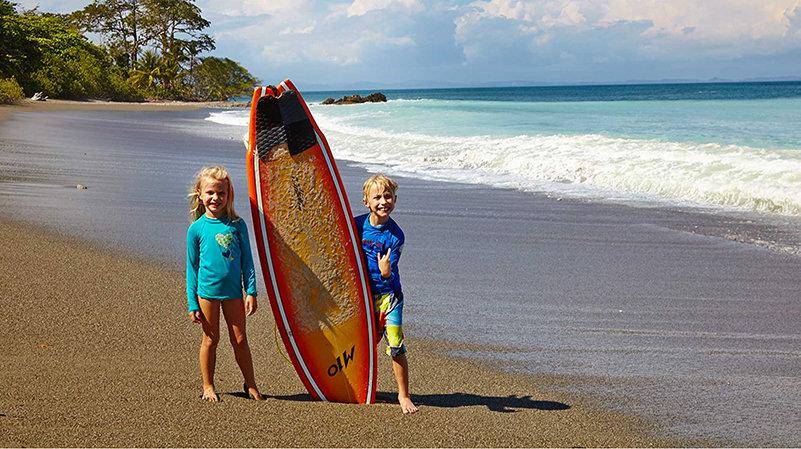
For families comparing international schools in Costa Rica, school choice is rarely just an education decision. The right school can shape where you live, how long the daily commute feels, which community your child joins, and whether a home truly works for everyday family life.
This guide focuses on families considering Tamarindo, Playa Langosta, Playa Grande, Hacienda Pinilla, Reserva Conchal, Papagayo and wider Guanacaste. It compares private, bilingual and international school options near the main coastal real estate areas served by Henkel & Williams Real Estate.
Use it to compare curriculum models, accreditation, language instruction, grade levels, campus culture, commute realities and family-friendly real estate before narrowing your property search.
If you are still in the broader research phase, our moving to Costa Rica guide explains the wider lifestyle, property and relocation context.
Table of contents
Key takeaways for families moving to Costa Rica with children
What curriculum options are available at international schools in Costa Rica?
What are the costs associated with private schools and international schools in Costa Rica?
Top international schools in Guanacaste, Costa Rica: CRIA, Journey School of Costa Rica and more
Challenges and considerations for private schools in Costa Rica
Factors to consider when choosing the right international school in Costa Rica
Extracurricular activities, facility profile and academic excellence
Practical relocation checklist for parents comparing schools and homes
Verify tuition, admissions, calendar and transport before choosing a home
How Henkel & Williams helps families connect schools, lifestyle and real estate

School and family relocation setting near Tamarindo, Costa Rica
Quick answer: shortlist schools before choosing a home
Families moving to Costa Rica with children should usually shortlist schools before choosing a home. In Guanacaste, map distance and real drive time can be very different.
Road conditions, traffic, construction, rainy-season access and natural barriers can change a school commute. Playa Grande, for example, can feel close to Tamarindo on a map, while the estuary changes the practical driving route.
A practical sequence is:
compare international schools in Costa Rica by region
confirm curriculum, grade levels, language model and admissions
test real commute times during a scouting trip
compare neighborhoods by school access and daily convenience
narrow the property search after the school shortlist is clear
This helps families avoid choosing a beautiful home that does not support school, work, activities, healthcare, internet, errands and weekly family rhythm.
School choice should remain connected to ownership structure, legal due diligence and budget planning. Use the Buy Property in Costa Rica as a Foreigner guide as the broader buying framework.
Key takeaways for families moving to Costa Rica with children
The best school in Costa Rica depends on the child, not only on rankings. Age, language background, learning style, academic goals and social confidence all matter.
For many relocation buyers near Tamarindo, the strongest decision comes from comparing education and real estate together.
Key points:
Guanacaste offers several private, bilingual, international and alternative school options.
San José and the Central Valley offer more traditional international school choice and city infrastructure.
School commute can shape the neighborhood shortlist as much as budget, beach access or property type.
A strong family home should support daily life, not just look good in photos.
Current tuition, admissions, calendar, transport and accreditation details should always be verified directly with each school.
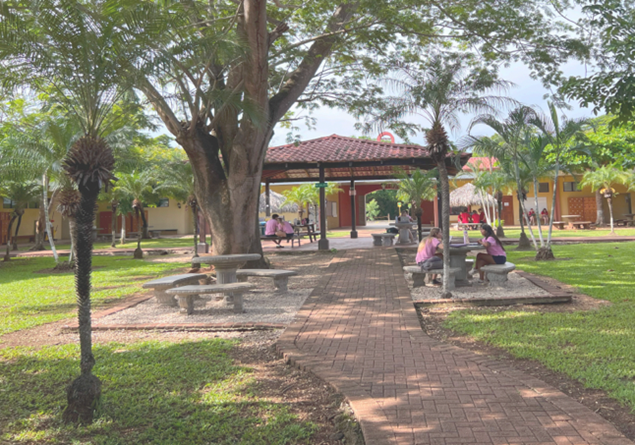
Campus and outdoor facilities at Costa Rica International Academy in Guanacaste, Costa Rica
Why choose an international school in Costa Rica?
Families often choose an international school in Costa Rica for continuity, language support and community. A school can help a child move between countries without losing academic direction.
International and bilingual schools may offer:
English-language or bilingual instruction
U.S.-style, IB, British, European or Costa Rican curriculum pathways
transferable transcripts or internationally understood diploma options
college counseling or university preparation for older students
extracurricular activities and facilities
a multicultural learning environment for children and parents
For relocation families, school also becomes a social anchor. It is often where children make friends, parents meet other families, and daily life starts to feel familiar.
What curriculum options are available at international schools in Costa Rica?
Curriculum is one of the most important factors to consider when choosing the right school in Costa Rica. The best choice depends on whether your family plans to stay long term, return home later, or keep university options open internationally, particularly considering the top international schools in Costa Rica.
Common curriculum and learning models include:
U.S.-style curriculum with transferable transcripts
Advanced Placement options at some schools
International Baccalaureate or baccalaureate-oriented pathways
bilingual English and Spanish instruction
Costa Rican MEP-recognized programs
project-based learning and hands-on projects
Montessori-inspired preschool and elementary models
Waldorf School or Steiner-inspired holistic education
micro-school or flexible learning models
For younger children, language immersion, teacher warmth, social confidence and daily happiness may matter more than university planning.
For older students, parents should look closely at diploma recognition, course selection, academic excellence, college counseling, class sizes and transitions to U.S., Canadian, European or Costa Rican universities.

Students and teachers in a learning environment near Tamarindo, Costa Rica
What are the costs associated with private schools and international schools in Costa Rica?
Private schools and international schools in Costa Rica vary widely in cost. Fees can depend on the school, grade level, student needs, calendar and optional services.
Ask each school for the current total cost, not just the headline tuition.
Common fee categories include:
annual tuition by grade level
registration or enrollment fees
books, technology and materials
uniforms and lunch
transport or bus service
extracurricular activities
language support or learning support
payment schedule and refund policy
For real estate planning, school cost should sit inside the full relocation budget. A home that looks comfortable on paper may feel different once tuition, transport, utilities, healthcare, maintenance, travel and property management are included.
If the property purchase itself will be financed, compare the school budget with the options and limitations in our Costa Rica property financing guide .
What are the best international schools in Costa Rica?
The best international schools in Costa Rica are not all in one place. Costa Rica has private, bilingual and international school options in San José, the Central Valley, Guanacaste and other expat-oriented communities.
For families who want beach lifestyle and real estate near Tamarindo, the most relevant options are usually in or near Tamarindo, Brasilito, Cabo Velas, La Garita, Playa Grande and Cañafistula.
A family choosing Reserva Conchal may look closely at CRIA or La Paz. A family choosing central Tamarindo may prefer Journey School or TIDE Academy. A family choosing Playa Grande may value NEO School for younger children, while families near rural areas southeast of Tamarindo may research Pacific Waldorf School.
Families still comparing coastal life with a city base may also research San José and the Central Valley. Those schools are not daily commute options for Tamarindo-based families, but they help set a benchmark for campus size, facilities, curriculum and private education.

Private and bilingual school setting in Guanacaste, Costa Rica
Top international schools in Guanacaste, Costa Rica: CRIA, Journey School of Costa Rica and more
Top international schools in Guanacaste, Costa Rica, include a mix of private, bilingual, international and alternative school options. The right fit depends on your child and your preferred area.
Parents should compare each school by curriculum, accreditation, language, grade levels, campus culture, transport and community fit.
curriculum and accreditation
language of instruction
preschool, elementary, middle and high school availability
teacher support and student-to-teacher ratios
campus or facility profile
extracurricular activities
transport and commute
school culture and parent community
Costa Rica International Academy (CRIA)
Costa Rica International Academy , usually called CRIA, is located in Brasilito near Reserva Conchal. It is one of the best-known international schools in Guanacaste and is often researched by families seeking a U.S.-style international school pathway.
CRIA may appeal to families who want English-forward instruction, dual U.S. and Costa Rican accreditation through MSA and MEP, Advanced Placement options and a structured college-preparatory environment.
Best fit: Families who value U.S. transferability, academic structure and a more traditional international school model.
Property context: Families considering CRIA often compare Reserva Conchal, Brasilito, Flamingo, Potrero and other northern Guanacaste areas, while still weighing access to Tamarindo.
La Paz Community School
La Paz Community School provides bilingual Pre-K–12 education across its Cabo Velas and Tempisque campuses. It combines dual-language immersion, experiential learning, community projects and an authorized IB Diploma Programme for Grades 11 and 12.
The school may suit families who want bilingual education, global citizenship, service projects and a cooperative school culture. It can also help children integrate into both international and Costa Rican community life.
Best fit: Families looking for bilingual integration, community service, diversity and a multicultural learning environment.
Property context: La Paz is relevant for families comparing Brasilito, Flamingo, Reserva Conchal, Potrero and nearby northern Guanacaste areas.
Educarte Centro de Aprendizaje
Educarte Centro de Aprendizaje is located near La Garita and Huacas. Its position can be practical for families living in Tamarindo, Villareal, Playa Grande, Brasilito and surrounding communities.
Families often research Educarte for:
bilingual education
MEP certification
project-based learning
smaller class settings
a structured but local learning environment
Best fit: Families wanting private bilingual education near Tamarindo without necessarily choosing the most internationally branded option.
Property context: Educarte can work for families comparing Tamarindo, Villareal, Huacas, Playa Grande and Brasilito.
Journey School of Costa Rica
Journey School of Costa Rica has a Tamarindo campus serving Pre-K through Grade 12. Its official campus information describes it as an IB World School, an MYP candidate and accredited or affiliated with MEP, MSA, CIS and UNESCO ASPnet.
For families looking for a central Tamarindo school, Journey may offer a community feel and a more holistic approach. Its location can simplify daily life when school, beach activities, restaurants, groceries, students and teachers are all clustered nearby.
Best fit: Families who want a Tamarindo-based school with bilingual instruction, creativity and community feel.
Property context: Journey is especially relevant for families considering Tamarindo or Playa Langosta and wanting a shorter daily school run.
TIDE Academy
TIDE Academy is an alternative school model in Tamarindo with very small class sizes and a flexible schedule. It may fit active families, traveling families, surf-focused families or children with creative and athletic routines.
Small class sizes can make the school day feel more individual. For some children, that means more direct teacher attention and a school rhythm that leaves room for sports, travel or project-based learning.
Best fit: Families looking for flexibility, individualized instruction and a smaller learning environment.
Property context: TIDE can reduce commute complexity for families living in central Tamarindo or Playa Langosta.
NEO School
NEO School is located in Playa Grande and combines Montessori and mainstream elements with project-based, future-focused learning. Its official curriculum emphasizes literacy, numeracy, nature immersion, swimming, ocean safety and real-world skills.
For families living in Playa Grande, NEO can simplify the daily school route. Parents should confirm current age groups, available places and programme fit directly with the school before choosing a home.
Best fit: Families in or near Playa Grande seeking individualized, nature-integrated and project-based education.
Property context: NEO is most relevant for families considering Playa Grande, Las Ventanas or nearby communities.
Pacífico Internacional
Pacífico Internacional is a Waldorf-inspired bilingual school in Cañafístula, southeast of Tamarindo. Its official materials describe preschool, primary and middle-school education with creativity, nature and hands-on learning at the center of the programme.
The school combines artistic, practical, intellectual and nature-based learning. Waldorf education often aims to foster a love of learning through rhythm, imagination, craft, outdoor activity and age-appropriate development.
Best fit: Families seeking holistic education, creativity, natural play, bilingual exposure and a less conventional school environment.
Property context: Pacific Waldorf may be relevant for families comparing Tamarindo, Villareal, Avellanas, Hacienda Pinilla and rural areas southeast of Tamarindo.
San José school benchmarks: American International School of Costa Rica and other top private schools
San José and the Central Valley offer a different lifestyle from Tamarindo and Guanacaste. Families researching this area often want larger campuses, broader private school choice, urban convenience and easier access to some specialist services.
For Tamarindo-based families, San José schools are mainly useful as a benchmark. They help parents compare curriculum, academic pathways, facilities, accreditation, teacher support, extracurricular activities and comprehensive education options.
American International School of Costa Rica
American International School of Costa Rica is often researched by families looking for an American international school of Costa Rica or AIS-style pathway in the Central Valley.
Parents should verify current curriculum, accreditation, diploma pathway, admissions and transport directly with the school.
Country Day School
Country Day School is one of the Central Valley schools families may compare when researching top private schools in Costa Rica.
It is most relevant to Guanacaste families as a benchmark for campus expectations, academic pathways and internationally oriented education.
Lincoln School
Lincoln School is another San José area option families may research when comparing leading international schools.
Parents should use it as a reference point for curriculum, campus, university preparation and extracurricular activities.
Blue Valley School
Blue Valley School is often included in Central Valley school research for families comparing private education in Costa Rica.
Families should confirm current programme details directly, especially if they are comparing IB, bilingual or international diploma routes.
Pan-American School, European School and The British School of Costa Rica
Pan-American School, European School and The British School of Costa Rica are also useful benchmark options for families comparing San José and the Central Valley.
They can help parents understand how Central Valley private schools may differ from smaller Guanacaste school communities.
Can Americans attend international schools in Costa Rica?
Yes. American children can attend private and international schools in Costa Rica, subject to each school’s admissions process, space, documentation, grade-level fit and academic requirements.
The same generally applies to Canadian, European and other international students.
Parents should ask about:
passports and birth certificates
previous transcripts
vaccination records
placement assessments
language support
enrollment timing
transfer of previous academic records
Families planning a long-term move should also coordinate school enrollment, residency timing and legal documentation with qualified professionals.
Challenges and considerations for private schools in Costa Rica
Private schools in Costa Rica can be excellent relocation anchors. The right school still depends on fit, not branding alone, and should provide the support your child needs.
Common challenges include:
limited availability in certain grade levels
admissions timing and waiting lists
differences between published curriculum and classroom experience
language adjustment for children who do not yet speak Spanish
social integration after an international move
commute time during rainy season or traffic peaks
transport reliability and route safety
teacher turnover or leadership changes
extra fees beyond tuition
differences between school calendars
long-term transcript transferability
The strongest approach is to speak directly with schools, visit campuses if possible, talk to current parents and test the daily commute before choosing a property.
Factors to consider when choosing the right international school in Costa Rica
Choosing the right international school means comparing more than reputation. The school should fit the child, the family rhythm and the long-term plan.
Important factors to consider:
academic pathway and accreditation
language model and support
class sizes and teacher access
campus culture and diversity
extracurricular activities and facilities
commute and transport
parent community
special learning or language support
long-term transition options
how the school fosters a nurturing environment
Some children thrive in a structured U.S.-style school. Others may do better in bilingual immersion, IB, project-based learning, Waldorf, Montessori-inspired or smaller alternative environments.
Extracurricular activities, facility profile and academic excellence
Extracurricular activities can be just as important as academics for expat families. Activities help children make friends, build confidence, learn Spanish naturally and feel part of the community.
Depending on the school and area, families may find:
soccer, swimming, surf, dance, martial arts and fitness
art, music, theatre and environmental projects
community service and service projects
After-school clubs and project-based activities are often found in the most schools, enhancing your child’s education.
outdoor education, nature learning and beach-based activities
college counseling or leadership programmes for older students
Facilities vary widely. A larger San José international school may offer sports fields, labs, libraries and arts facilities. A smaller Guanacaste school may offer a more intimate community, outdoor learning and stronger integration with beach and nature-based life.
That outdoor rhythm is one reason families compare schools with climate and beach access. See our Costa Rica climate and real estate opportunities guide for regional context.

Family-friendly neighborhood near Tamarindo, Costa Rica
Where to live in Costa Rica with children
Expat families should choose a place to live by looking beyond the property itself. School fit, commute, healthcare, groceries, internet, water, activities, community, budget and road access all shape daily family life.
For families with children, the best location is usually not just the most beautiful area. It is the area that supports the school run, work rhythm, friendships, activities and weekly errands without creating unnecessary stress.
Families drawn to wellness, nature and long-term quality of life may also value the Nicoya Blue Zone lifestyle and real estate appeal .
School commute and neighborhood choice near Tamarindo
Commute planning is one of the most important parts of a family move to Guanacaste. A short drive on a map may become longer because of road conditions, traffic or natural barriers.
Playa Grande is a useful example. It sits close to Tamarindo on a map, but the estuary changes the practical driving route. A family may love the quiet surf lifestyle and still need to test the school route carefully.
During a scouting trip, test:
morning drive to school
afternoon pickup route
drive from school to activities
drive from school to groceries
rainy-season access
parking and pickup logistics

Residential area for families comparing schools near Tamarindo and Guanacaste
Best areas near Tamarindo for families comparing schools
Tamarindo offers restaurants, surf, shopping, clinics, groceries and a lively social scene. It can suit families who want convenience and shorter access to central school options.
Playa Langosta is close to Tamarindo but generally quieter and more residential. It may work for families who want beach proximity without being in the busiest part of town.
Hacienda Pinilla offers space, privacy, beach access, golf, trails, surf and a managed community feel. Most errands and schools require driving.
Playa Grande and Las Ventanas can suit families seeking nature, surf and a lower-density rhythm. Commute planning becomes especially important for older children.
Reserva Conchal is a resort-style gated community near Brasilito. It may appeal to families who value amenities, golf, beach club access and proximity to CRIA or La Paz.
Papagayo and northern Guanacaste may appeal to families seeking privacy, luxury and airport access. Daily school life near Tamarindo requires careful commute testing.
For a property-focused comparison of the town, neighborhoods and available home types, continue with our Tamarindo real estate guide . For the lifestyle side, compare the Best Beaches Near Tamarindo guide . For a broader area comparison, see our guide to the best places to buy property in Guanacaste.

Coastal lifestyle and family-friendly real estate near Tamarindo, Costa Rica
Family-friendly real estate in Costa Rica
Families often look for 3-4 bedroom homes, yards, pools, casitas, guest space and flexible work areas. Those features matter, but daily-life fit matters just as much.
Before buying, check:
school commute
internet type and reliability
water supply and storage
road access during rainy season
healthcare and pediatric care
grocery access
maintenance support
security preferences, without assuming guarantees
property management needs
space for homework, remote work, guests and outdoor living
A family home in Costa Rica should support real weekly life, not only the dream version shown in listing photos.
Once the school and area shortlist is clear, review current Costa Rica listings by location, bedroom count and property type.
Practical relocation checklist for parents comparing schools and homes
Before visiting Costa Rica
shortlist schools
request admissions and tuition information
map likely neighborhoods
schedule school tours
prepare documents
identify commute routes
During a scouting trip
tour schools
test school-run drives
visit grocery stores and clinics
explore after-school activities
view homes in different areas
compare daytime and evening atmosphere
Before buying
verify internet and water
arrange inspections
consult an attorney
confirm school timing directly with the school
review transport options
compare daily-life practicality
Residency, taxes, legal status, pets, shipping and vehicle import should be discussed with qualified professionals. Do not rely on general online information for final decisions.
Verify tuition, admissions, calendar and transport before choosing a home
Published school details can change. Treat any online tuition, facility, transport, teacher, calendar or admissions detail as a starting point.
As of August 2026, several schools already publish 2026/27 calendars, handbooks or admissions information. Treat those materials as a current starting point, then reconfirm tuition, available grades, transport and enrollment timing directly with each school.
Before making a property decision, verify:
current tuition and fees
grade availability
admissions deadlines
accreditation and diploma pathway
transport routes
school calendar
language support
learning support
How Henkel & Williams helps families connect schools, lifestyle and real estate
For families moving to Costa Rica with children, school choice is one of the strongest real estate filters. The best decision usually comes from looking at education, commute, neighborhood, infrastructure and property fit together.
Henkel & Williams Real Estate can help families compare Tamarindo, Playa Langosta, Hacienda Pinilla, Playa Grande, Reserva Conchal, Papagayo and wider Guanacaste through a practical family-life lens.
That means connecting school priorities with area guidance, property type, commute reality, lifestyle needs and trusted local professionals where specialist advice is needed.
The goal is not simply to find a beautiful home. It is to help families understand which areas may support the right school fit, the right neighborhood feel and the right daily rhythm before making a long-term property decision.
Read more About Team Henkel-Williams , or contact Team Henkel & Williams to compare schools, neighborhoods and suitable properties with a local real estate team.
FAQ: international schools in Costa Rica
Are there international schools near Tamarindo, Costa Rica?
Yes. Families can research CRIA, La Paz Community School, Educarte, Journey School of Costa Rica, TIDE Academy, NEO School, Pacific Waldorf School and other private or bilingual schools in Guanacaste.
Does Costa Rica have good schools?
Costa Rica has a range of public, private, bilingual and international schools. In expat-oriented areas, families can find private options with U.S., IB, bilingual, MEP or alternative learning pathways.
Is school mandatory in Costa Rica?
School attendance rules and practical requirements should be confirmed with current official sources or qualified local advisors. For relocating families, the practical first step is to confirm enrollment requirements directly with the chosen school.
Is education free in Costa Rica?
Public education exists in Costa Rica. Private and international schools usually charge tuition and additional fees, so families should request current cost information directly from each school.
What is the school year in Costa Rica?
Some international schools follow a North American-style calendar, often around August or September to June. Others may follow a Costa Rican or different academic calendar. Confirm current dates directly with each school.
How do international schools in Costa Rica teach English?
Some schools teach mainly in English. Others combine English and Spanish through bilingual or dual-language instruction. Parents should ask which language is used for core subjects, support services and communication with families.
How long is a school day in Costa Rica?
School-day length varies by school, grade level and programme. Parents should confirm start times, pickup times, after-school care and activity schedules before choosing where to live.
What should families avoid when choosing a school or place to live?
Avoid choosing a home before testing the school commute. Also avoid relying only on reputation, old online tuition figures or listing photos. Visit the school, speak with parents and verify the practical details first.